
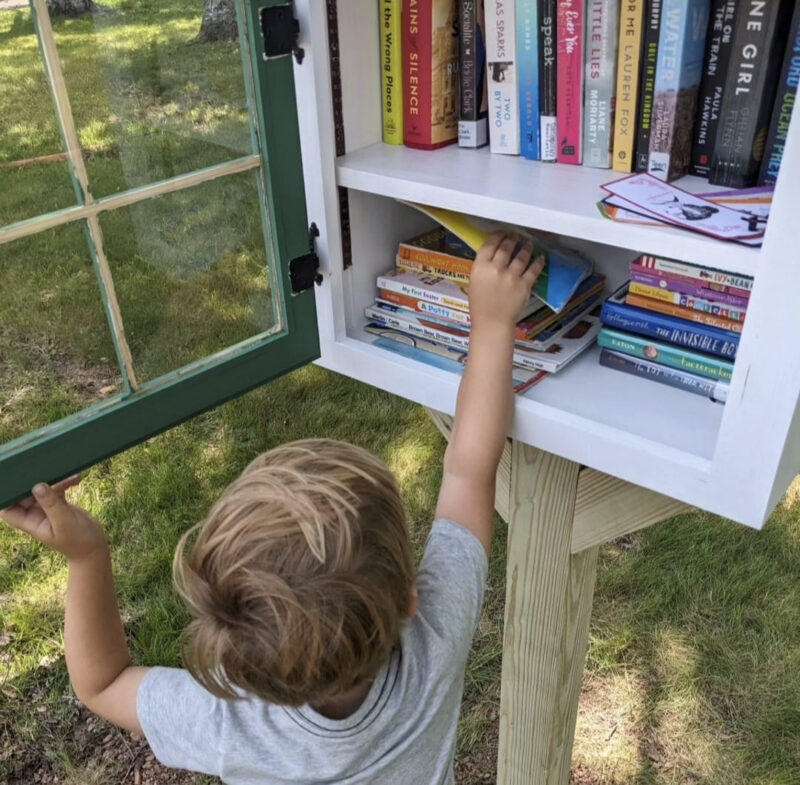
At Little Free Library, we believe that by providing greater, more equitable book access in neighborhoods worldwide, our nonprofit strengthens communities and influences literacy outcomes. But this isn’t just a hunch! With help from Team LFL volunteers, we’ve compiled a list of 10 key facts about the relationship between book access and children’s literacy.
Exposure to books from an early age helps children process language and build their vocabulary as they enter school.
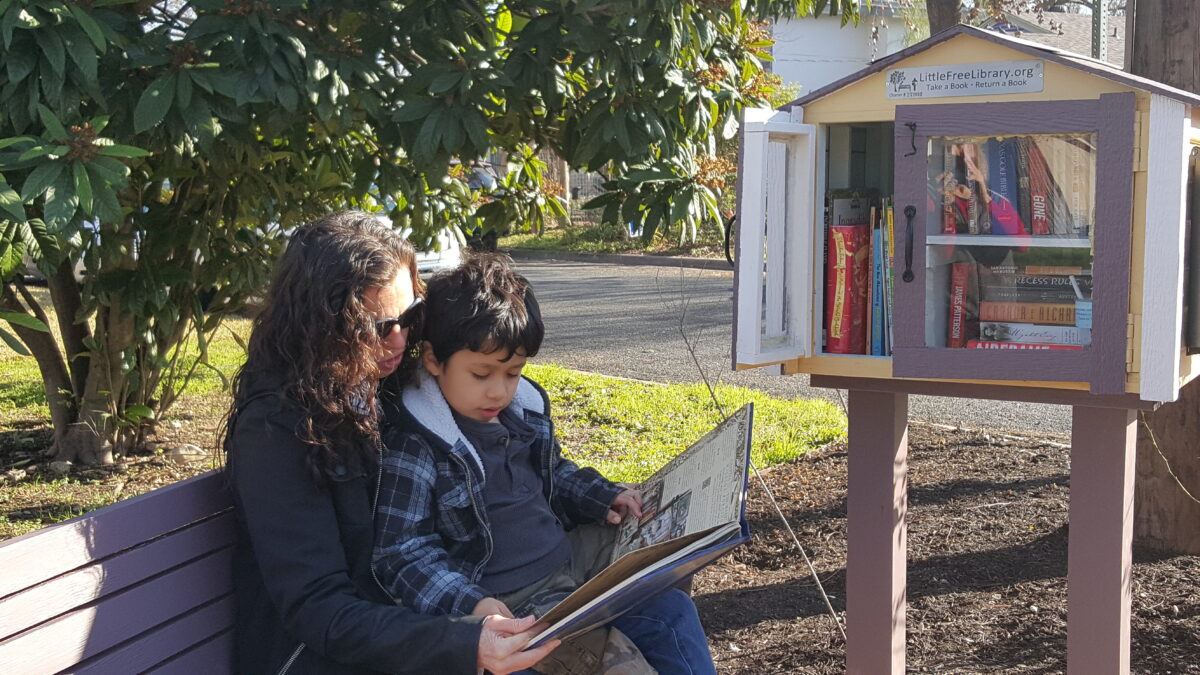
10. In a 2019 study, researchers found that young children whose parents read just one book a day aloud to them are exposed to at least 290,000 more words by the time they enter kindergarten than kids who aren’t read to regularly—giving them a head start when learning to read.
9. According to Unite for Literacy’s analysis of data provided by the National Center for Education Progress (NAEP), 74% of 8th-grade students who reported having more than 100 books in their home and a daily habit of reading scored at or above proficient on the NAEP reading assessment, compared to only 21% of 8th-grade students who reported having 100 or fewer books in their home and less than a daily habit of reading.
8. Research compiled from The Imagination Library Program shows there is “an upward spiral of causality” in which children who are more proficient in early literacy skills read more, and because of more print exposure, their reading skills improve more with each year of life. The same article notes that students who have access to a greater number of books at home read more during outside of school time—even after adjusting for reading motivation.
Despite evidence that book access is key to children’s literacy development, the disparities in book access in the U.S. are profound.
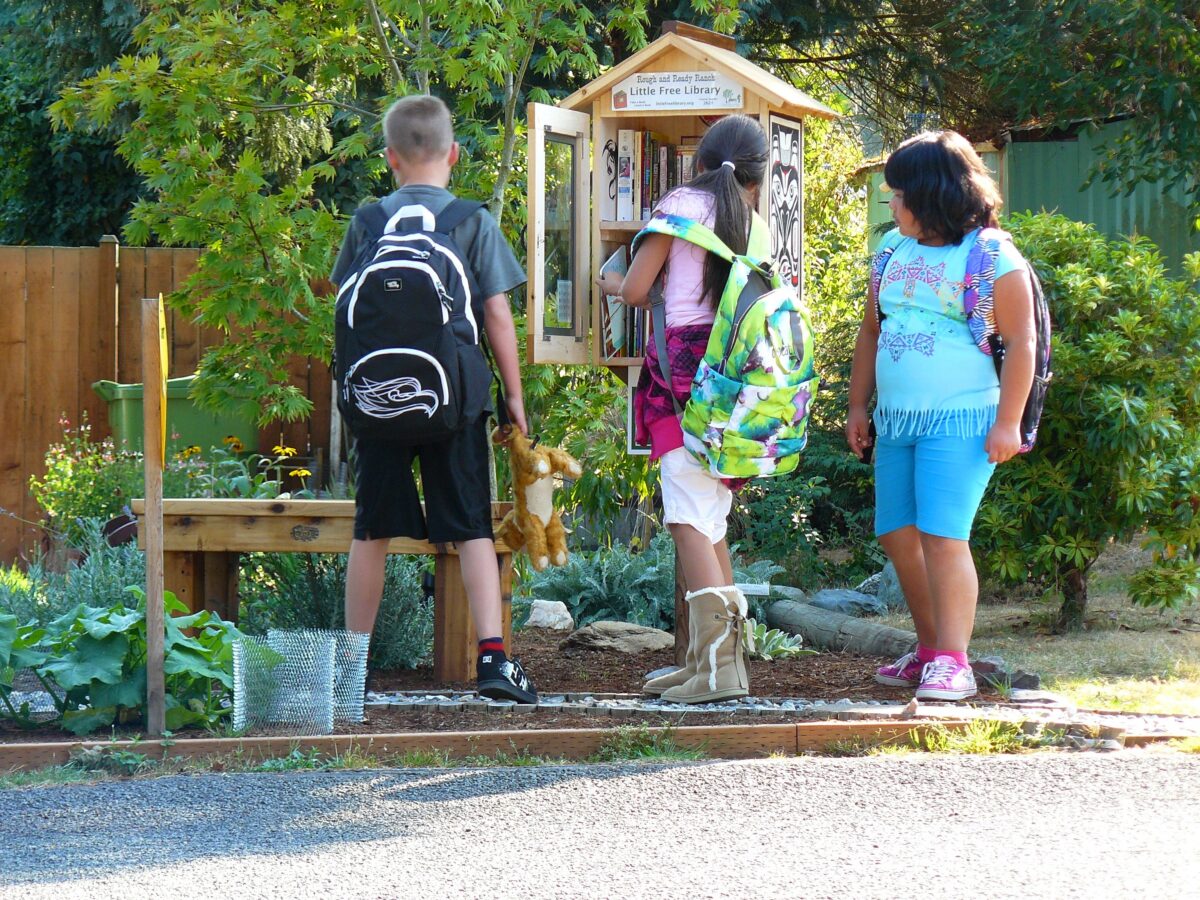
7. 61% of U.S. children living at or below the poverty line have no books at home according to the National Center for Educational Statistics.
6. The American Consortium of Equity in Education shares that 45% of children in the U.S. live in neighborhoods that lack public libraries and stores that sell books or in homes where books are not present.
5. Reading is Fundamental warns that more than 80% of children from economically disadvantaged communities lose reading skills over the summer because they lack access to books, learning resources, and enrichment opportunities such as trips to the library, bookstore, or museum.
4. Scholastic’s 2019 Kids and Family Reading Report found that families with incomes of $100,000 or more have nearly twice the amount of books than families with less than $35,000 in annual income (125 vs. 73), and Hispanic and Black children have fewer books in their homes than white, multi-racial, Asian, or children of other racial backgrounds.
Not only is book access important, the types of books children have access to matter!
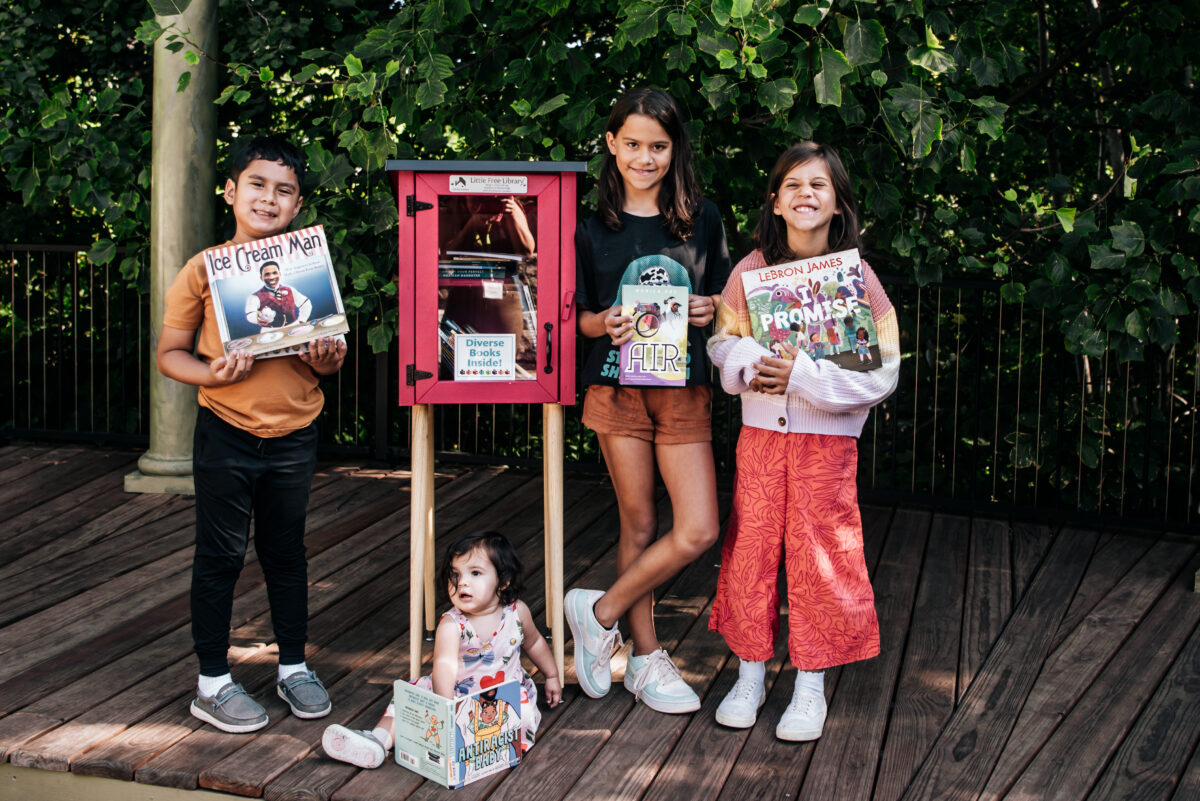
3. Scholastic’s Kids and Family Reading Report also found that 4 in 10 kids (42%) have trouble finding books that they like. This percentage is at 59% among infrequent readers, and is true of roughly half of kids by age nine. Similarly, nearly one in three parents (28%) agree that their child has trouble finding books. These findings align with a survey done by the NAEP, which reveals the number of Americans ages 9 to 13 who say they read for fun on an almost daily basis have dropped to the lowest levels since the mid-1980s.
2. In a study conducted by First Book, and participated in by 437 educators from Title I schools nationwide, 99% of educators agreed that having a diverse classroom library is important, and 70% of educators reported that their students more often choose books that feature characters that look like them. However, only 58% said they have a classroom library as diverse as their classrooms.
1. The study by First Book, also found that increasing access to diverse books in the classroom environment increases the amount of time that children spend reading and positively impacts students’ reading scores. Over the course of the study, collective student reading time increased by 4 hours per week on average after educators added new, diverse books to their classrooms.
Building equitable book access is at the heart of Little Free Library’s mission. Through our programs, we grant Little Free Library book-sharing boxes full of high-quality, diverse book to communities where book access is scarce. A recent study in collaboration with Baltimore County Public Schools affirmed our efforts, revealing that because of Little Free Libraries children read more!